How to Know If a Stock Is Worth Buying: The 3-Question Test
Most People Buy Stocks Without a Real Process
I once bought shares of Virgin Galactic (SPCE) because a smart friend of mine loved it and kept hyping it up. I didn’t understand the business model, didn’t check the financials, didn’t think about what could go wrong. Just took his word for it and three months later, I was down 15% and kicking myself for not doing my homework.
Most retail investors check the price, skim a headline, maybe glance at a chart, and hit buy. No framework. No filter. Just faith and a hunch. And that’s how you end up holding stocks you don’t understand, losing money you didn’t need to lose, and second-guessing every decision.
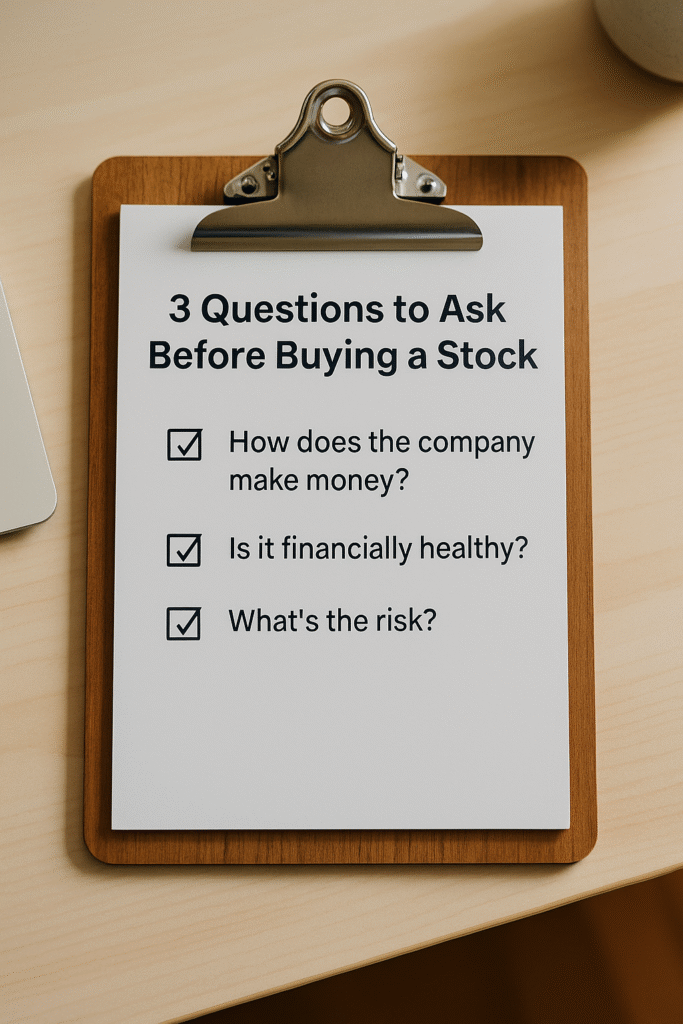
Look, you don’t need a finance degree or expensive tools to invest with confidence. You just need a simple, repeatable process. If you can answer three questions about a company before you buy, you’re already ahead of most investors. If you can’t, you’re gambling and risking your hard-earned money.
Let’s walk through the three questions that separate confident investors from impulse buyers.
Question #1: How Does This Company Actually Make Money?
This is the foundation. If you can’t explain what a company does in plain English, you shouldn’t own it.
I’m not talking about reciting their mission statement or rattling off buzzwords. I’m talking about understanding the business model in a way that makes sense to you, and in a way, you could explain to someone else.
Here’s what you need to know:
- What do they sell?
Products? Services? Software? Ads? Be specific. - Who’s buying it?
Consumers? Businesses? Governments? Know your customer base. - Why do customers choose them?
Is it price? Quality? Convenience? Brand loyalty? There’s always a reason.
Here’s what clarity looks like:
Apple sells iPhones, Macs, and services like iCloud. People buy them because they’re easy to use, work seamlessly together, and the brand is trusted. Simple.
Here’s what confusion looks like:
Snowflake is like… a cloud data warehouse? Not really a warehouse, but a place where companies store data so they can… share it? Or analyze it? And they don’t run on their own cloud, they run on other clouds… which somehow makes them special?
They charge you based on how much data you use, something like that, I’m not exactly sure but it sounds expensive and the stock is doing well.
If the explanation sounds like you’re guessing, that’s a red flag. Move on.
Use AI to Speed up the Process
Instead of digging through dense investor presentations, let AI summarize the business model for you.
Prompt:
“Explain [Company Name]’s business model in simple terms. What do they sell, who buys it, and why do customers choose them?
This takes 30 seconds and gives you a clear starting point. If the AI explanation doesn’t make sense, the business probably doesn’t either.
Question #2: Is The Company Financially Healthy?
A great story doesn’t matter if the company’s financials are a mess. You can love the product, believe in the vision, and still lose money if the numbers don’t add up.
You don’t need to be an accountant. You just need to know the basics and spot the big red flags.
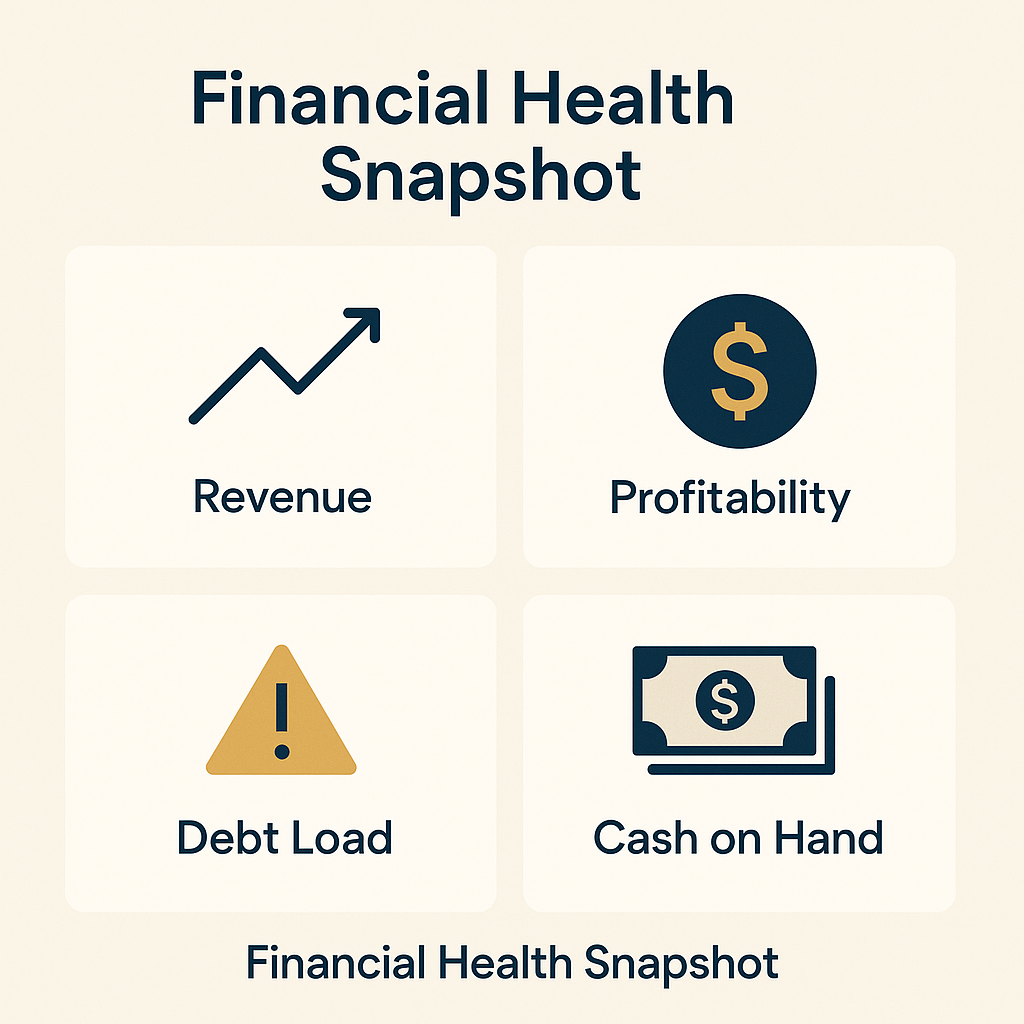
Start here: Is revenue growing consistently?
This is the one number that matters most. If revenue is growing year over year, the company is moving in the right direction. If it’s flat or declining, dig deeper or move on.
Growing revenue hides a lot of problems. Shrinking revenue reveals all of them.
After reviewing revenue, check these:
- Profit trend: Are they making money or burning through cash?
- Debt load: How much debt are they carrying? Is it manageable, or are they one bad quarter away from trouble?
- Cash on hand: Do they have enough cash to keep operating if things get tough?
You don’t need to memorize balance sheets but it’s important you understand whether the company is on solid ground or skating on thin ice. And look, most of us aren’t going to sit down and read a 200-page financial report. That’s where AI helps. It can pull the exact information you need in seconds. Here’s a prompt you can use to do it.
Prompt:
“Summarize [Company Name]’s financial health based on their latest earnings report. Focus on revenue growth, profitability, debt levels, and cash position. Highlight any red flags.”
Okay, so the company makes money and it’s financially healthy. That’s great. But here’s what most investors skip: What could go wrong
Question #3: What’s the Risk… and Can I Handle It?

Most people only look for the upside. They see the growth potential, the hype, the excitement, and they buy. Savvy investors flip the script. They look for the downside first.
Every stock has risk. The question is whether you understand it and whether you can live with it.
Here’s how to think about it:
External Risks (Things Outside the Company’s Control)
- Competition: Are there strong competitors that could take market share? Think Uber vs Lyft.
- Industry decline: Is the whole sector shrinking or facing headwinds? Think tobacco and newspapers.
- Regulation: Could new laws or policies hurt the business? Think tariffs and travel restrictions.
Internal Risks (Things Inside the Company)
- Leadership issues: Is management solid, or are there red flags like high turnover or bad decisions?
- Overvaluation: Is the stock price way ahead of the fundamentals?
- Financial stress: Even if they look okay now, are cracks starting to show?
You don’t need to analyze every possible risk. Start with these two:
- Is the industry growing?
- Is the company overvalued?
If both check out, then dig into the rest.
The Personal Risk Check
Here’s the most important question: Can you sleep at night owning this stock? If the thought of it dropping 20% keeps you up at night, it’s not worth it. No stock is worth your peace of mind.
Use AI to Play Devil’s Advocate
Before you buy, ask AI to challenge your thesis. Let it poke holes in your idea so you can see what you’re missing.
Prompt:
“I’m considering investing in [Company Name / Ticker]. Here’s why I think it’s a good investment: [Your reasoning]. Now, act as a skeptical investor and play devil’s advocate. What are the biggest risks? What could go wrong? What am I missing or ignoring? Be brutally honest.”
I did this recently with Vita Coco (coco). I was excited about the growth story, and strong financial metrics but AI pointed out rising competition, tariff and political risks and a P/E ratio that was way too high. I still think it’s a good company and it’s on my watchlist, but AI helped me think clearly and I realized the stock is overvalued and it’s best to wait for a pullback before buying.
Putting It All Together: Your 30-Second Stock Check
Here’s how to use this framework every time you consider buying a stock:
✅ Yes to all three questions
Research deeper. This stock deserves more of your time.
⚠️ Yes to two out of three
Understand the gap. Can you live with the missing piece, or is it a dealbreaker?
❌ No to any of these questions
Pass for now. There are thousands of stocks out there. Don’t force a trade just because you like the story. Investing confidence doesn’t come from complexity. It comes from clarity. If you can’t answer these three questions clearly, you don’t know the stock well enough to own it.
Common Mistakes to Avoid
Before you go, here are the traps I see people fall into again and again:
❌ Buying because “everyone’s talking about it”
Hype isn’t a strategy. If you can’t explain the business, don’t buy it.
❌ Ignoring debt because revenue looks good
Growth means nothing if the company’s drowning in debt.
❌ Falling in love with a company and ignoring red flags
You’re investing in a business, not marrying it. Stay objective.
Want the Exact AI Prompts I Use?
If you want to make this process even easier, I’ve put together the exact AI prompts I use to invest.
Download my free Savvy Investor AI Toolkit. It includes copy-paste prompts for:
- Researching stocks
- Mastering your investing emotions
- Understanding earnings reports
No guesswork. Just plug in the company name and let AI do the rest.